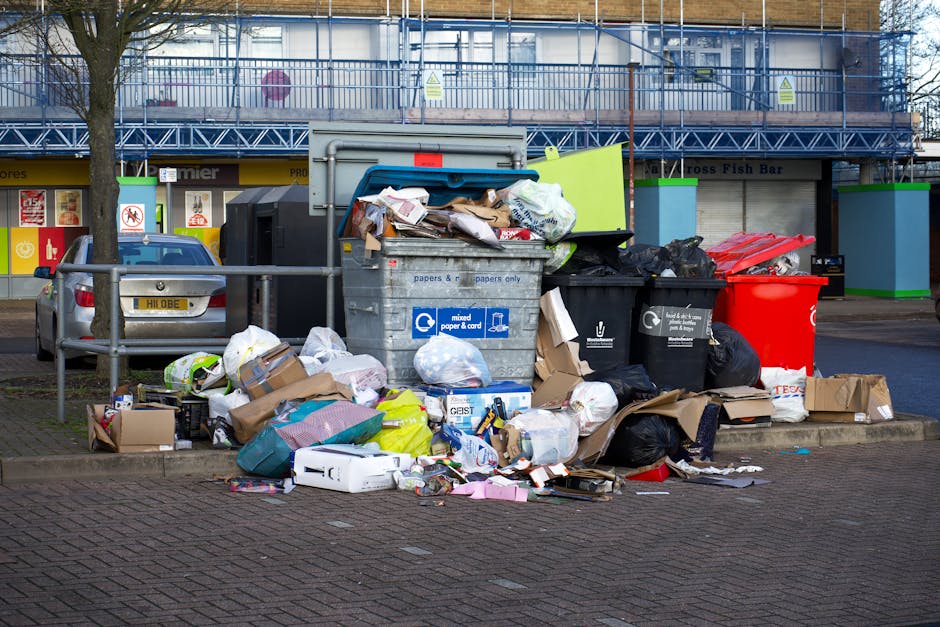
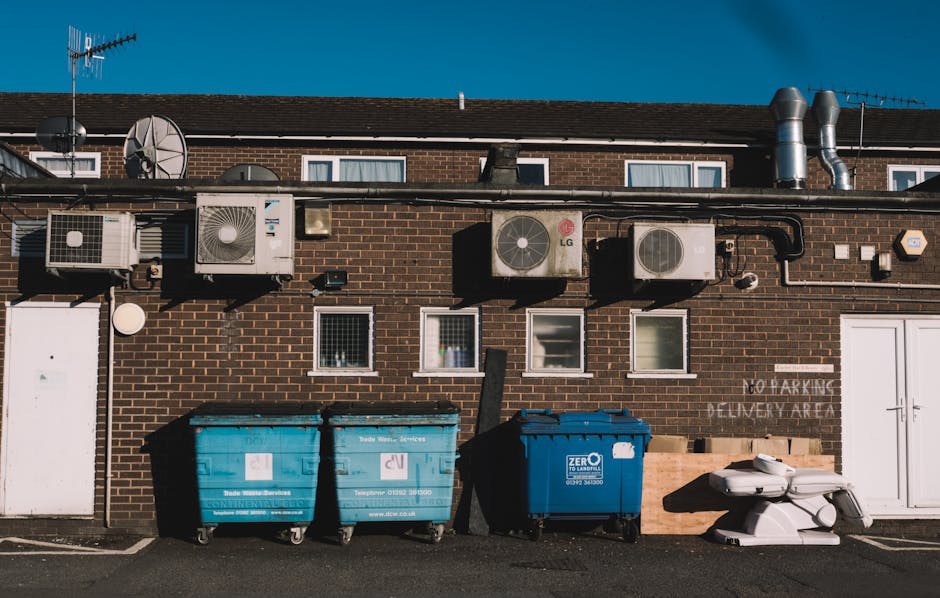
Council waste collection in London
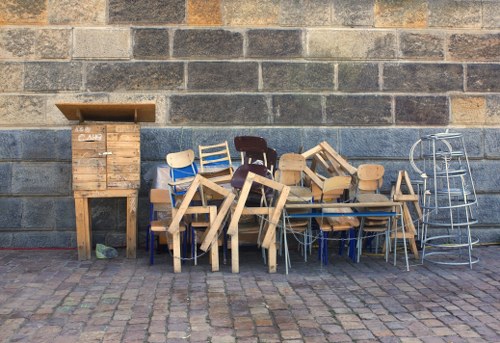
Council waste collection in London needs to be clear, practical and suited to the items that local households and businesses want removed. We focus on the collection and disposal of general rubbish, bulky items and mixed unwanted materials, with services shaped around straightforward booking and sensible separation of recyclable material where possible. If you need help with a single item, several pieces of furniture or a fuller clearance, the aim is to make the process easy to arrange and easy to understand.
Our work covers common clearance jobs such as council rubbish collection, bulky items and wider waste removal, with the emphasis placed on safe handling and the right disposal route for each load. That can suit homes, landlords, managed properties and businesses that need a reliable way to move waste out without adding more disruption than necessary.
For a quick start, think about what needs taking away, whether any pieces can be separated in advance, and where the waste is currently stored. You can then use the rest of this page to understand the service areas in more detail and decide what to include in your enquiry. If you are ready, you can request a quotation once you know the scope.
Collection options for different kinds of waste
Our council waste collection service is built around the fact that not every load is the same. Some jobs involve light household rubbish, while others include heavier items, awkward furniture or bags of mixed waste that need sorting before disposal. We work with a practical approach, so the collection method can be matched to the material, access and volume involved rather than forcing every customer into the same pattern.
Bulk waste collection is useful when the items are too large for normal disposal arrangements but do not amount to a full clearance. This can include bagged waste, broken household goods, packaging from a move, or the kind of accumulated items that fill a corner of a property but do not justify overcomplication. Clear information about the amount and type of waste helps the collection run smoothly.
Items we can help remove
Common requests include old furniture, white goods, mattresses, loose rubbish, garden waste and the contents of garages, lofts or spare rooms. We also deal with items that are too bulky for standard household collection. Where appropriate, we can help direct loads towards reuse, recycling or disposal, depending on what the items are and how they are presented for collection.
Bulky item and furniture collection
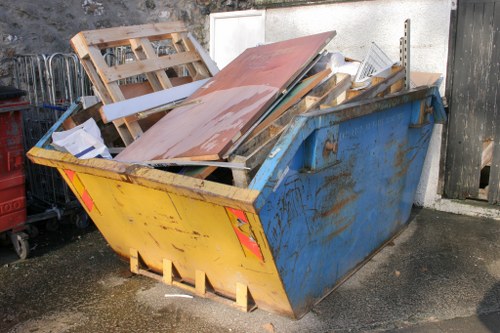
Bulky waste often causes more difficulty than its size suggests, especially when stairs, narrow hallways or limited parking are involved. Our bulky waste collection and furniture collection services are designed for those larger household pieces that need careful handling rather than casual removal. Sofas, chairs, tables, wardrobes and similar items can usually be handled as part of a planned visit.
Some customers need a simple sofa collection or help with one unwanted bed or mattress. Others need several matching pieces removed together as part of a room refresh or end-of-tenancy clearance. In either case, it is useful to describe whether the item is intact, dismantled or difficult to access, because that can affect the approach needed on the day.
When a property has more than one bulky item, combining them into a single collection is often more efficient than arranging separate visits. We can handle mixed furniture loads as long as the items are suitable for the service requested, and the aim is always to remove them in a way that is orderly, safe and appropriate for the material involved.
Household clearances and room-by-room removal
Some enquiries are about a whole property rather than one item. For those situations, house clearance, home clearance and flat clearance provide a more complete way to clear furniture, household rubbish and mixed contents in one planned service. These jobs can involve fully furnished rooms, loft spaces, cupboards, storage areas or items left behind after a move or tenancy change.
Loft clearance and garage clearance are often needed where possessions have built up over time. These spaces tend to contain a mix of seasonal items, broken equipment, boxes, old fittings and things that are difficult to sort quickly. A methodical approach matters here, because the right sequence of removal can reduce handling time and keep access routes clear.
In many homes, a single collection plan works better than trying to tackle everything in one rushed effort. If you are arranging a larger clearance, it helps to note whether any items are staying, whether the property is occupied, and whether there are practical limits such as stairs or limited parking. That keeps the collection focused and avoids unnecessary delay.
Specialist disposal for common household items

Some waste types need a more specific disposal route than general rubbish. Our service pages include mattress disposal, bed disposal, fridge disposal and white goods recycle for items that are bulky, difficult to handle or better separated from general loads. This helps customers choose the right category instead of assuming everything can be handled in exactly the same way.
Specialist items may need extra care because of their size, internal components or the way they are built. A mattress is handled differently from a fridge, and a fridge is handled differently from a small household appliance. For that reason, accurate descriptions are useful: state the item type, quantity and whether it still sits in a room, garage or basement, and mention anything unusual about access.
- Mattresses and bed frames from bedrooms or spare rooms
- Fridges and other bulky white goods from kitchens or utility spaces
- Old furniture that is no longer suitable for use
- Mixed domestic waste that includes one or more heavier items
Waste collection for gardens, builders and workplaces
Not all collections are domestic. We also support outdoor and work-based clearances such as garden clearance, builders waste clearance and office clearance. These services are useful when a property renovation, landscaping job or workplace move leaves material behind that is too bulky or too mixed for simple kerbside disposal.
Garden jobs often involve branches, cuttings, soil bags, old outdoor furniture, pots and miscellaneous waste from tidying or redesigning a space. Building-related waste may include packaging, broken fittings, offcuts and other remnants from light renovation or repair work. Office clearances usually focus on desks, chairs, shelving, archive material and general contents that need removing in an organised way.
Our approach is to keep these services straightforward, with the collection matched to the load rather than the label alone. If the waste includes a mixture of item types, it is sensible to note that at the outset so the collection can be planned with the right time, equipment and disposal route in mind.
Pricing factors and what affects a quotation

A quotation for council waste collection is usually shaped by the nature of the load rather than by a fixed assumption. The main factors are the volume of waste, the type of material, whether items are heavy or awkward, and how easy it is to reach them. Loads containing furniture, appliances or mixed bulky waste may need a different plan from a small pile of bagged rubbish.
Access can matter just as much as the contents. Narrow stairs, basement storage, gated entrances, shared hallways and limited parking can all affect how a collection is completed. If items need dismantling, if several floors are involved, or if the waste is in a locked room, those details should be included when asking for pricing. The clearer the description, the easier it is to provide a sensible quotation.
If you are comparing options, it helps to separate what must be removed from what can stay. That keeps the scope specific and avoids paying for more than you need. You can prepare a clear list of the main items, but there is no need to write a long explanation: a simple description is usually enough to start the conversation.
How to prepare a collection request
A well-prepared request does not need to be complicated. In most cases, a few basic details are enough: the waste type, approximate quantity, whether any items are especially heavy, and the collection location within the property. If the job includes several item groups, note them separately so that the list is easier to follow. This is helpful whether you are arranging a one-off pickup or a fuller clearance.
It is also useful to mention anything that may affect the route to the items, such as stairs, shared entrances or restricted parking. If you can separate recyclable material from general rubbish without difficulty, that may help shape the disposal plan. Pricing and quotes can then be discussed with a better understanding of the work involved, which makes the process more straightforward for everyone.
Simple information that helps
Keep the enquiry practical: what needs removing, where it is, and what makes access easy or awkward. If the collection is connected to a move, refurbishment or end-of-tenancy change, mention that briefly so the timing can be considered. There is no need for long background detail; useful facts are what matter most when building an accurate quote.
Disposal, recycling and sensible handling
Responsible waste handling is an important part of any collection service. Where materials can be separated, they should be directed towards the most suitable route available. That may involve recycling, reuse or standard disposal depending on the item and its condition. Services such as waste disposal and recycling and sustainability reflect that broader approach and help customers think about what happens after removal.
Not every collection is the same from a disposal point of view. Mixed rubbish, furniture, appliances and building-related waste can each follow different handling steps. The aim is to deal with the load properly rather than to make blanket claims about what can always be reused or recycled. If a load includes items in good condition, that can be considered separately from damaged or contaminated waste.
This is one reason why accurate item descriptions are valuable. They help the collection be planned around the real content of the load, not an approximation. Where there is any uncertainty, a short description is still better than none, because it allows the service to be matched more closely to the material involved.
About London

London is a large and varied capital shaped by centuries of expansion along the River Thames. Its historic core developed from the Roman settlement of Londinium, and over time the city grew through medieval trade, Georgian squares, Victorian industry and modern redevelopment. The result is a place where old and new sit side by side: church spires and market streets stand near glass towers, while residential neighbourhoods range from compact terraces to grand mansion blocks and post-war estates. Many districts retain strong local identities even as they sit within a wider metropolitan fabric. The city’s geography is equally distinctive, with the Thames cutting through it from west to east and a network of parks, commons and waterways adding green and blue corridors across the urban landscape.
Why choose a planned collection service
For many customers, the main value of a planned collection is simplicity. Instead of trying to move awkward items separately or managing several disposal trips, a single arranged pickup can deal with the lot in one visit. That is particularly useful when the waste includes both ordinary rubbish and larger pieces that are not practical to leave out for standard collection. The service is intended to be clear, orderly and easy to organise.
We support customers with a range of waste and clearance tasks, from everyday rubbish to more substantial items and whole-room clearances. If you are deciding what to include, think in terms of what genuinely needs to go rather than what might eventually be useful later. That keeps the collection focused and helps prevent unnecessary handling of items that are still required. Request a quotation when you are ready to set out the scope.
To get started, you can note the main items, the collection location and any access details that may matter on the day. If the job involves a specialised item or several types of waste, mention that too. The final step is simple: send the details through and ask for the quotation that best matches the work required.