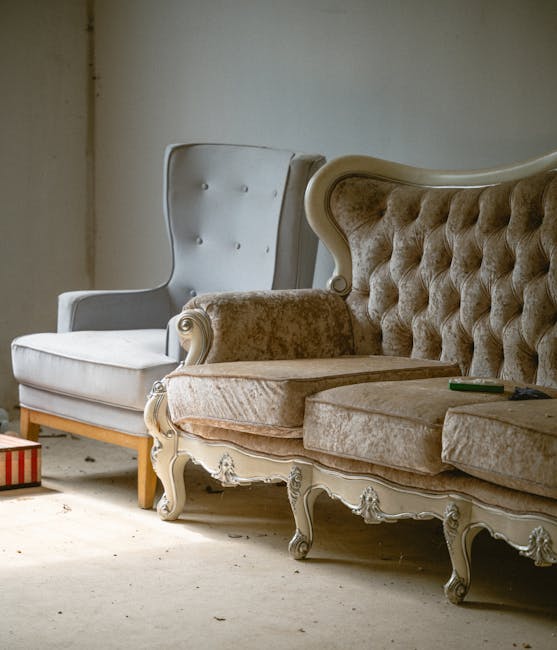
Step-by-step guide to safe sofa disposal across the UK
Getting rid of an old sofa sounds simple until you actually start moving it. The thing is heavy, awkward through doorways, hard to fit in a car, and not always something you can just leave on the pavement. If you want a safe, legal, and low-stress way to handle sofa disposal across the UK, a clear plan helps more than most people expect.
This guide walks you through the practical options, the checks worth making before collection day, and the mistakes that can turn a straightforward job into a headache. Whether you are replacing a settee, clearing a rental, or dealing with a bulky item that has seen better days, you will find the safest route here, along with sensible links to related services such as sofa collection, furniture disposal, and council large item collection.
Truth be told, most sofa disposal problems come down to three things: access, compliance, and timing. Handle those well, and the rest gets much easier.
Table of Contents
- Why safe sofa disposal matters
- How sofa disposal works in practice
- Key benefits and practical advantages
- Who this is for and when it makes sense
- Step-by-step guidance
- Expert tips for better results
- Common mistakes to avoid
- Tools, resources and recommendations
- Law, compliance, standards and best practice
- Options, methods and comparison table
- Case study or real-world example
- Practical checklist
- Conclusion
- Frequently asked questions
Why Step-by-step guide to safe sofa disposal across the UK Matters
A sofa is not just another bag of rubbish. It is bulky, often upholstered with mixed materials, and can be a real challenge to move without injury or damage. Safe disposal matters because it protects you, your home, your neighbours, and the people who collect or process the item.
There is also a wider issue: sofas are part of the household waste stream that needs handling properly. In many cases, the frame, fabric, foam, legs, and fixings should be assessed for reuse or recycling before anyone thinks about disposal. That is why reputable furniture collection and recycling and sustainability practices matter. A sofa dumped illegally can become a public nuisance quickly, especially outside flats or on narrow residential streets.
For households, the risk is usually physical: strained backs, trapped fingers, scratched floors, broken bannisters, and the classic moment where a sofa is three-quarters out of the doorway and nobody knows what angle to take next. For landlords, letting agents, and businesses, the risks are broader: missed move-out deadlines, complaints, and avoidable cleanup costs. Safe disposal is simply the calmer, cleaner, more reliable route.
Expert summary: If your sofa is large, heavy, or awkward to access, plan disposal before collection day, not during it. Measure first, lift safely, and choose a method that matches the item and the property.
How Step-by-step guide to safe sofa disposal across the UK Works
At a practical level, sofa disposal is about matching the item to the right route. In the UK, that often means one of four paths: council collection, a private bulky waste service, reuse or donation, or a trip to a recycling facility if you are able to transport it safely.
The process usually starts with identifying what the sofa is made of and how easy it will be to move. A two-seater in a ground-floor home is very different from a corner sofa in a top-floor flat with a narrow stairwell. Once you know the constraints, you can choose the safest option and avoid wasting time on services that are unsuitable.
If you are comparing services, it helps to look at related pages such as sofa removal, bulky waste collection, and large item collection. Those pages are useful when your sofa is just one item among several.
Across the UK, local councils and private operators can have different booking rules, collection windows, and access requirements. Some will collect from the kerb only, while others may offer indoor collection for an extra fee or as part of a clearance job. The safest route depends on your property layout, how quickly you need the item gone, and whether the sofa can be reused or recycled.
Key Benefits and Practical Advantages
Safe sofa disposal is about more than getting the living room back. Done properly, it saves time, reduces risk, and improves the chance that the item is handled responsibly. A few of the biggest advantages are worth calling out clearly.
- Less physical strain: You avoid improvised lifting and the kind of twisting that causes injuries.
- Cleaner exits: Using the right route reduces scuffs on walls, stairwells, and flooring.
- Better compliance: You are less likely to fall foul of local rules or fly-tipping issues.
- More efficient clearances: Particularly useful during moves, refurbishments, or end-of-tenancy deadlines.
- Potential reuse or recycling: Some sofas can be diverted from disposal if they are in usable condition.
Another advantage is psychological, which sounds a bit grand until you have an old sofa blocking a hallway. Once disposal is booked, the room feels bigger, the move feels more manageable, and the job becomes a task instead of a constant background annoyance. Small win, but a real one.
For properties being cleared at scale, you may also want to look at home clearance or house clearance if the sofa is part of a larger clean-out.
Who This Is For and When It Makes Sense
This process is relevant to a surprisingly wide group of people. If you are a homeowner replacing a worn-out sofa, a tenant leaving a flat, a landlord preparing a property, or a business clearing office furniture, safe disposal gives you a structured way to move forward.
It also makes sense in scenarios that are easy to underestimate:
- you are moving out and the sofa will not fit in the new space;
- the upholstery is damaged, stained, or no longer hygienic;
- you have a sofa bed or sectional piece that is too awkward for standard waste;
- the building has tight access, no lift, or restricted parking;
- you are clearing several furniture items at once and want one coordinated pickup.
If you are dealing with mixed household items, a broader service like furniture clearance or waste clearance may be more efficient than arranging multiple separate collections.
In our experience, the people who benefit most are those who plan just enough to avoid last-minute scrambling. You do not need a spreadsheet. You do need measurements, a rough idea of access, and a decision made before the removal slot arrives.
Step-by-Step Guidance
Here is the most reliable way to dispose of a sofa safely in the UK.
1. Identify the sofa type and condition
Start by checking whether it is a standard sofa, sofa bed, corner unit, recliner, or modular piece. Note whether it is intact, water-damaged, infested, heavily worn, or still usable. That condition affects whether reuse, donation, or disposal is the better path.
If the sofa is in decent condition, do not assume disposal is the only answer. A reusable piece may be better passed on through a reuse route. If it is damaged beyond practical use, focus on removal and recycling options instead.
2. Measure the item and the access route
Measure the width, height, and length of the sofa. Then measure doors, hallways, stair turns, lifts, and any tight external gates. Many disposal problems happen because people only measure the sofa itself, not the route out.
If you live in a flat, this step is essential. A sofa that looks manageable in the lounge may be impossible to turn on a staircase landing. For tighter properties, a service such as flat clearance is often more practical than trying to improvise on the day.
3. Decide on your disposal route
You generally have three realistic options:
- Council collection: good when you can wait for the booking slot and the sofa meets local rules.
- Private bulky waste collection: useful when you need flexibility, faster timing, or help with lifting.
- Reuse, donation, or resale: appropriate only if the sofa is clean, safe, and acceptable to the receiving organisation.
For many readers, the fastest route is a private collection booked through a service like sofa collection or, if several items are going, bulk waste collection.
4. Check what needs removing before collection
Take off cushions, throws, loose covers, feet, and detachable sections if the collection provider requests it. Bag small fixings separately. If your sofa bed has a mattress section, check whether it should be booked separately as part of bed disposal or similar furniture disposal arrangements.
This is a detail people often miss. The smaller the parts, the easier and safer the lift. It also reduces the chance of snagging fabric or damaging walls.
5. Prepare the room and the route out
Clear side tables, lamps, rugs, shoes, and anything else that could trip someone carrying the sofa. Protect floors where needed, especially on stairs or around corners. If access is tight, move the sofa as close to the exit as you safely can before the crew arrives.
Think like a mover for five minutes and you will save yourself a lot of hassle. It is not glamorous, but then neither is having to pivot a three-seat sofa halfway through the hallway.
6. Lift safely or let trained removers handle it
If you are moving the sofa yourself, use proper lifting technique: bend at the knees, keep the load close, and avoid twisting. Use two people minimum for anything substantial. Gloves can improve grip, and closed shoes are a must.
If the sofa is heavy, awkward, or going down stairs, it is safer to use trained removers. That is one of the reasons a specialist service like furniture disposal or rubbish removal can be worth it, even if you could technically try to do it yourself.
7. Hand over only to a licensed and trustworthy collector
Before you let anyone take the item, make sure the collection is properly arranged and that you understand where it is going. You should feel comfortable asking how the sofa will be handled and whether the provider prioritises reuse or recycling where possible.
Trust matters here. If you are unsure about a company, look at its about us, insurance and safety, and payment and security information before booking.
8. Keep a record of the disposal
For landlords, agents, and businesses, it is sensible to keep proof of collection and any booking details. Even households may want a confirmation email or receipt if the item is being removed as part of a move or property handover.
This is one of those boring little admin habits that becomes very useful if a dispute ever arises. A five-second screenshot can save a fifty-minute conversation later.
Expert Tips for Better Results
Once you know the basics, a few practical habits can make the entire process smoother.
- Book around access, not just urgency: A same-day slot is useless if parking is impossible outside your property.
- Photograph the sofa first: It helps the collector understand size, condition, and handling needs.
- Strip loose parts in advance: Cushions, throws, and feet should not be left until the last minute.
- Use a measured route: Door widths and stair turns matter more than floor plans.
- Ask about recycling: If the provider can separate materials responsibly, that is a strong sign of good practice.
If you are dealing with multiple items, combining them into one visit can be more efficient than booking separate removals. A sofa, coffee table, and broken chair often fit neatly into one furniture collection appointment, provided access is clear and the provider knows what to expect.
Another good habit is to work backwards from collection day. If you know the sofa must be gone by Friday, do the measurements and booking earlier in the week. Rushing the process usually costs more in time than the booking itself.
Common Mistakes to Avoid
Most sofa disposal mistakes are avoidable. They tend to happen when people assume the item is easier to move than it really is.
- Leaving booking too late: You may end up with an unsuitable slot or delayed collection.
- Not checking access: The sofa may fit through the room door but not the stairwell.
- Forgetting about disassembly: Fixed legs or sectional parts can make an item much harder to handle.
- Using unsuitable transport: Forcing a sofa into a car or van without planning is asking for damage.
- Putting it out as ordinary rubbish: This can create council issues and may be treated as fly-tipping in some circumstances.
- Ignoring condition: A damaged, contaminated, or pest-affected sofa needs careful handling, not casual loading.
One more common error: people focus on removal but ignore the surrounding clear-out. If the path is blocked with boxes, bins, or loose items, the sofa becomes harder and riskier to move. That is why many people pair sofa disposal with rubbish clearance or a broader waste removal visit.
Tools, Resources and Recommendations
You do not need specialist equipment for every sofa disposal, but a few simple tools make the job noticeably safer.
| Tool or resource | Why it helps | Best use |
|---|---|---|
| Measuring tape | Confirms sofa size and route clearance | Before booking or moving |
| Protective gloves | Improves grip and reduces cuts or scrapes | Manual handling |
| Floor protection | Helps avoid scratches and scuffs | Stairs, hallways, tight corners |
| Camera phone | Creates a useful record of condition and access | Before collection |
| Booking confirmation | Clarifies time, location, and service scope | Collection day |
For service research, the most useful supporting pages are usually those that explain scope and expectations clearly. Alongside sofa-specific pages, a reader may also find value in pricing and quotes, recycling and sustainability, and contact us if they want to check availability before booking.
If you are disposing of a sofa as part of a wider property clean-up, the following service pages are also relevant: house clearance, office clearance, and garage clearance when stored items are involved.
Law, Compliance, Standards, or Best Practice
In the UK, sofa disposal is not just a logistics issue. It sits within broader waste-handling expectations, which means the safest option is the one that keeps the item out of improper disposal routes and places it with a responsible collector or authorised facility.
As a general rule, you should avoid leaving sofas where they could obstruct public land, and you should not assume that a council will collect a bulky item unless you have followed the booking process. Local requirements can vary, so checking the relevant council page is always sensible. A page such as council waste collection or council rubbish collection may help you understand the service family, but always confirm the specific local arrangement before relying on it.
Best practice also means choosing a provider that is transparent about its procedures, safety, and disposal route. Look for clear information on health and safety policy, complaints procedure, and terms and conditions. That does not guarantee perfection, but it does show the business is trying to operate in a structured, accountable way.
For commercial customers, sofa disposal can overlap with business waste expectations, especially when clearing offices, hospitality spaces, or furnished rentals. In those cases, business waste removal may be more suitable than a standard household booking.
One final point: responsible disposal is also about record-keeping and honesty. If a sofa is contaminated, damaged, or has been in an environment with odours, pests, or moisture, say so upfront. Clear information helps the collector choose the safest handling method.
Options, Methods, or Comparison Table
Here is a straightforward comparison of the main sofa disposal methods in the UK.
| Method | Best for | Pros | Watch-outs |
|---|---|---|---|
| Council bulky item collection | Simple household disposals with flexible timing | Often convenient and familiar | May involve waiting, booking limits, or kerbside rules |
| Private sofa collection | Fast removal, awkward access, multiple items | Flexible, often quicker, lifting help included | Usually paid service |
| Reuse or donation | Clean, usable sofas in good condition | Extends item life, reduces waste | Acceptance criteria can be strict |
| DIY transport to facility | People with suitable vehicle and lifting help | Direct control over timing | More effort, more risk, requires safe loading |
If your sofa is one of several household items, compare the whole job rather than the sofa alone. A combined booking like bulky waste collection can make more sense than multiple smaller arrangements. And if the room is being cleared end to end, a broader home clearance or waste disposal service may be the cleaner choice.
Case Study or Real-World Example
A common real-world scenario is a tenant moving out of a two-bedroom flat in West London. The sofa is a three-seater, the stairwell has a sharp turn, and the building entrance sits close to a busy road. The tenant first measures the sofa and then checks the stair width and landing space. It becomes obvious that moving it without help would be awkward at best.
Rather than waiting until moving day, they arrange a collection service in advance, send a photo of the sofa, and confirm that the crew can access the building at the chosen time. They remove the cushions, clear the hallway, and protect the floor near the entrance. On collection day, the handover is quick because the provider already knows what to expect.
The result is straightforward: no scratched walls, no emergency lifting, and no frantic search for someone with a van. That kind of planning also makes it easier to bundle in other items, such as an old chair or coffee table, using a broader furniture clearance service.
This is a good example of how sofa disposal becomes much safer when you treat it like a small project rather than a last-minute chore.
Practical Checklist
Use this checklist before collection day.
- Confirm the sofa type and condition.
- Measure the sofa and the exit route.
- Decide whether disposal, reuse, or resale is best.
- Choose between council, private collection, or DIY transport.
- Book the service and keep the confirmation.
- Remove cushions, loose covers, and detachable parts if needed.
- Clear hallways, stairwells, and doorways.
- Protect floors and nearby surfaces.
- Arrange parking or access instructions if relevant.
- Have a second person available if you are moving it yourself.
- Check whether the sofa bed mattress needs separate handling.
- Keep proof of collection for your records.
Conclusion
Safe sofa disposal across the UK is much easier when you follow a simple sequence: assess the item, measure the access, choose the right collection method, and prepare the route before anyone starts lifting. That approach reduces risk, avoids unnecessary damage, and gives you a much better chance of a smooth, legal, and efficient removal.
If the sofa is part of a bigger clear-out, it is usually worth thinking in terms of the whole space rather than a single item. Services such as sofa removal, furniture disposal, and waste removal can save you time and help keep the process organised. And if you need to check what will work best for your property or area, reviewing the provider's service pages and trust information is a smart next step.
Get a free quote today and see how much you can save.
Frequently Asked Questions
Can I put an old sofa out with my regular rubbish?
Usually, no. Sofas are bulky items and are often handled through a separate bulky waste route rather than standard household bins or regular collection streams. Check your local council or a specialist collection service before putting anything out.
What is the safest way to move a sofa down stairs?
The safest approach is to use at least two capable adults, move slowly, keep the item under control at all times, and avoid twisting on the stairs. If the sofa is heavy or the stairwell is tight, it is often safer to book professional removal.
How do I know whether a sofa should be reused or disposed of?
If it is clean, structurally sound, and free from major damage, it may be suitable for reuse or donation. If it is badly worn, infested, contaminated, or structurally unsound, disposal is usually the better option.
Do councils collect sofas everywhere in the UK?
Council bulky item services exist in many areas, but the booking process, timing, and collection rules vary from place to place. Always check your local authority's current guidance before assuming collection is available.
What should I do with a sofa bed mattress?
Check whether the mattress needs to be removed separately or booked as a separate item. In some cases, a service like mattress disposal may be relevant if the mattress is being removed alongside the sofa bed.
How much does sofa disposal cost in the UK?
Prices vary depending on location, access, number of items, and whether you choose a council service or a private collection. For a more accurate figure, use a quote page or request pricing based on your specific item and postcode.
Can I leave the sofa on the pavement for collection?
Only if the service has explicitly told you to do so and you are following the correct local rules. Leaving bulky items on the street without permission can create problems and may be treated as improper waste disposal.
What if my sofa will not fit through the door?
First check whether any parts can be removed safely, such as feet, cushions, or modular sections. If that still does not solve the issue, professional removers may need to assess whether the item can be taken out intact or whether disassembly is required.
Is it better to book sofa removal with other furniture?
Often, yes. If you have more than one item, combining them into a broader furniture collection or bulk waste collection can be more efficient than arranging separate visits.
What should I look for in a trustworthy collection provider?
Look for clear pricing, safety information, terms and conditions, and transparent contact details. Pages such as about us and health and safety policy can help you judge whether the provider is well organised and accountable.
Can a sofa be recycled?
Parts of a sofa may be recyclable, depending on the materials and the facilities involved. Upholstery, metal components, timber, and foam may be handled differently, which is one reason responsible collectors talk about recycling and sustainability rather than treating every sofa as identical waste.
What is the easiest option if I need the sofa gone quickly?
A private bulky waste service is often the fastest and most flexible option, especially when access is awkward or you need collection on a tight schedule. If you also have other items to clear, a broader waste or furniture service can save even more time.